
Pakistan’s solar boom: two markets, one new rule

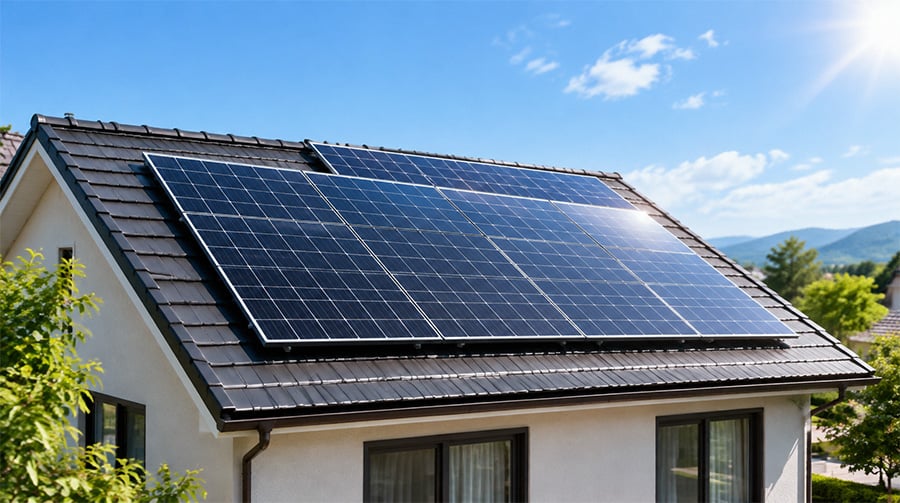
Pakistan’s solar boom is running on two tracks. Registered net metering is concentrated in well-served, higher-income utility areas, while a much larger unregistered wave of off-grid and behind-the-meter systems is growing where the grid is least reliable.
By June 30, 2025, Pakistan had 6.1 GW of net-metering capacity across 378,339 consumers, with about 85% concentrated in six distribution companies: LESCO, IESCO, K-Electric, MEPCO, FESCO and GEPCO. Five of the six report near-zero load shedding and bill recovery above 100%. The exception is Karachi’s K-Electric, which reported 5.2 hours of load shedding a day.
In these better-served areas, solar adoption is driven primarily by electricity prices rather than outages. The national average base tariff rose from PKR 16.91/kWh in fiscal year 2022 to PKR 35.50/kWh in fiscal year 2025, and the top residential slab reached PKR 48.84/kWh. A rooftop system displacing the most expensive units can pay for itself in two to four years.
The hidden boom is harder to measure but likely larger. Since fiscal year 2020, module imports have reached roughly 54 GW by March 2026, far exceeding registered net-metering capacity. Agricultural grid consumption fell 31% year over year in fiscal year 2025 as farmers solarized tube wells, and midday grid demand has dropped sharply.
Both channels are thinning utilities’ revenue base. Capacity payments rose 46% to PKR 1.9 trillion in fiscal year 2024, and those costs are recovered through per-unit tariffs. Every unit leaving the grid raises the per-unit cost for customers who remain, who are increasingly those who cannot afford solar.
In February, NEPRA replaced net metering with net billing for new connections, crediting exports at about PKR 11–13/kWh under five-year contracts, while existing contracts stay in place until they expire. This change governs only the visible boom and is likely to slow registered adoption, make battery storage and self-consumption more attractive, and push marginal adopters into the unregistered segment.
What this means for EVCity
For EVCity, Pakistan’s shift confirms a broader pattern we see across emerging markets: when electricity prices rise and grid reliability is uneven, solar alone saves money, but solar plus storage saves independence.
EVCity solar modules are designed for this next phase. The panels uses a 2.0 mm + 2.0 mm dual-glass structure with an IP68-rated junction box and a wide operating temperature range from -40°C to +85°C, making it suitable for high-heat, dusty and humid environments. Its electrical parameters are optimized to work efficiently within the MPPT range of common storage-ready inverters, and EVCity’s platform allows users to monitor generation, storage status and household consumption in real time.

With the EVC-720 model achieving up to 23.2% component efficiency (and the EVC-580 at 22.45%), our panels generate significantly more power from limited rooftop space compared to standard modules. This efficiency is crucial for urban homes in Lahore or Islamabad where roof area is constrained but energy demand is high.
Under net billing, the economics favor self-consumption. High-yield modules, smart inverters and battery storage become more important than simply exporting surplus power. For installers, distributors and EPC partners, the opportunity is moving from “more panels” to “smarter solar-plus-storage systems” that can cut bills, provide backup power and keep operating when the grid drops.
Policy direction
The researchers recommend measuring behind-the-meter capacity through customs data, installer registrations, surveys and feeder-level daytime load. They also suggest time-of-use pricing, transparent fixed network charges, time-differentiated export credits, and solar-plus-storage mini-grids for the worst-served areas. Battery imports rose from 1.4 GWh in 2024 to 4.6 GWh in 2025, and NEPRA has already required co-located storage of at least 10% of firm capacity in the country’s first renewable wheeling auction.
Pakistan’s solar boom is best understood not as a simple policy success or crisis, but as a verdict on the incumbent model. The next wave will be won by systems that can generate more, store more and consume more of their own power.