
Europe’s Energy Storage Enters a New Phase: Large-Scale Projects Lead, Residential and C&I Markets Accelerate Restructuring

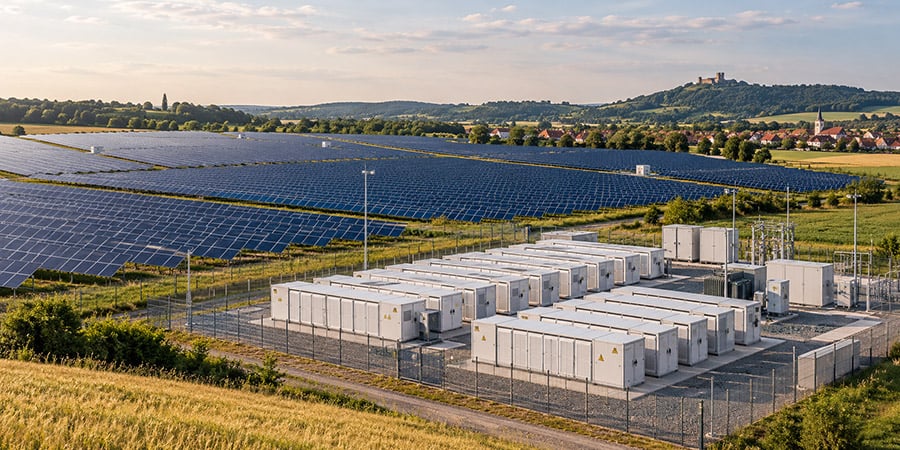
Europe’s battery energy storage market is entering a new development phase. According to the latest industry insights from EUPD Research, installed energy storage capacity across the EU, UK, Switzerland, Norway and Ukraine is set to nearly double from 34 GWh in 2025 to 65 GWh in 2026, marking one of the fastest expansion periods in the region. What is driving this wave is no longer scattered backup demand, but utility-scale projects — batteries are shifting from a “supplementary technology” to a core tool for power system balancing.
Utility-Scale Projects Become the Main Engine of the Next Growth Wave
Across all market segments, the utility-scale sector is the clear leader. EUPD Research expects the utility segment alone to install around 44 GWh in 2026, making it the largest contributor to Europe’s overall market growth. Countries with faster renewable energy expansion are moving ahead more quickly, while grid operators are increasingly relying on batteries for cross-period dispatch and greater system flexibility.
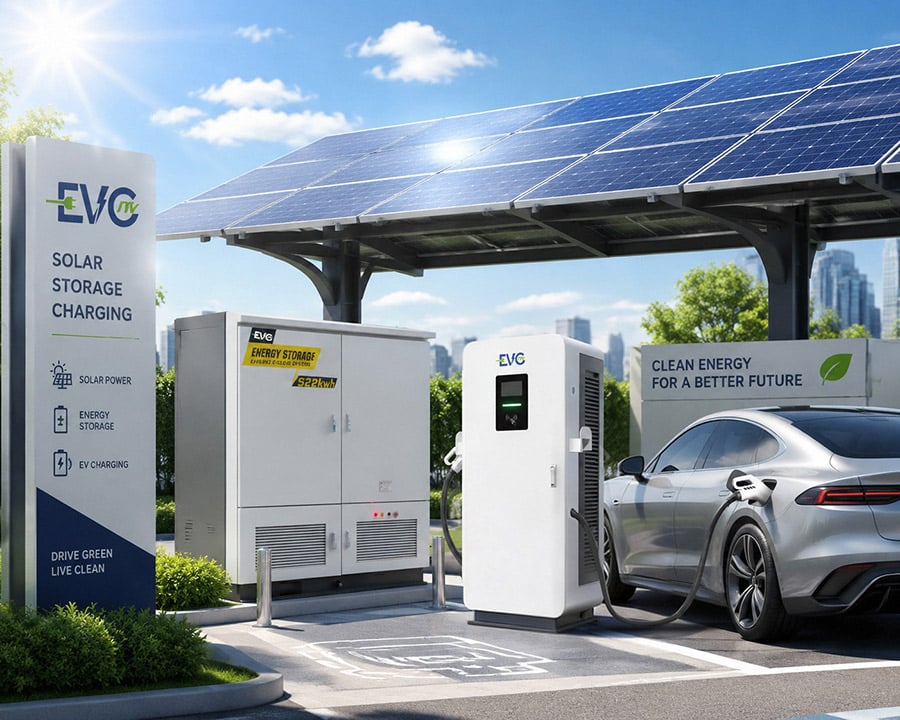
Although electricity prices have eased from their energy-crisis peaks, they remain high enough to support strong project economics. This is further reinforced by power market reforms, new funding mechanisms, improved permitting processes and national policy support. EVCity’s 522/261 kW liquid-cooled energy storage cabinets, designed for medium-to-large C&I and solar-storage-charging scenarios, are modular products built for such high-intensity applications — offering wide operating temperature ranges, high protection ratings, smart dispatch readiness and scalable stacking according to project size.
Projects Are Growing Larger and More Complex, Reshaping the Competitive Landscape
One notable shift is that projects are becoming larger and more complex. EPC companies are moving toward greater specialization, and a more structured project ecosystem is emerging compared with the earlier fragmented market. Local contractors continue to serve smaller installations, while national, regional and pan-European players take on larger projects spanning multiple countries.
This means partnerships and delivery capability are now as important as battery technology itself. For manufacturers, market entry paths are widening — from simply selling equipment to building long-term partnerships with customers. This also explains why EVCity has chosen to build a full-scenario portfolio covering everything from residential to C&I applications, rather than betting on a single specification.
Residential Storage: Not Slowing Down, But Entering a More Mature Competitive Stage
The residential market is often misread as having “peaked,” but EUPD’s view is that it is entering a more competitive and mature stage, not slowing down. Residential installations are expected to reach around 15 GWh in 2026, with Germany, Italy, the Netherlands, Austria and the UK showing the strongest performance.
Multiple factors are driving this growth: higher retail electricity prices, continuously falling battery costs, tax incentives and VAT exemptions in certain countries, as well as growing consumer demand for energy independence. At the same time, real challenges remain — uneven smart meter deployment, financing constraints, installer labour shortages and the gradual phase-out of some subsidies.
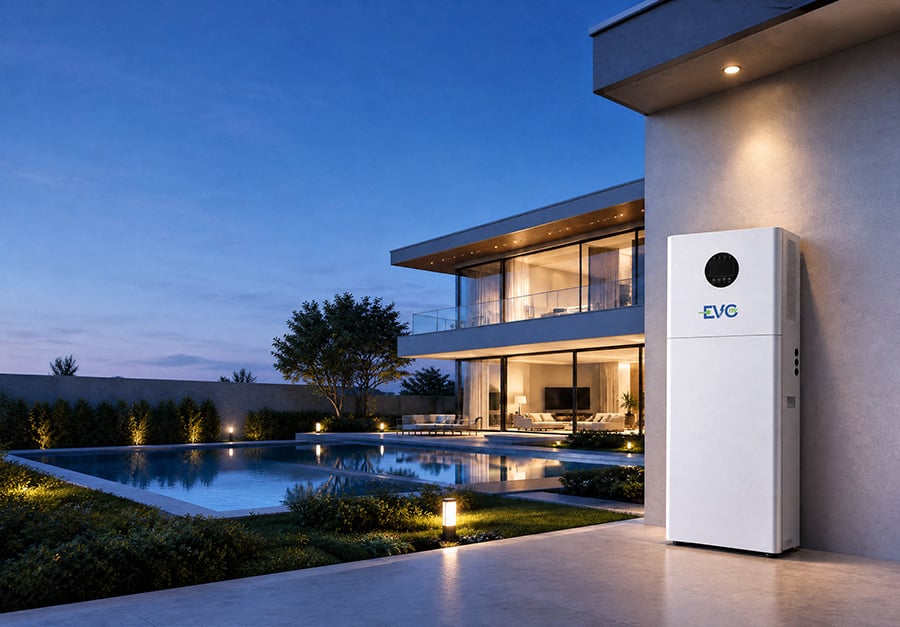
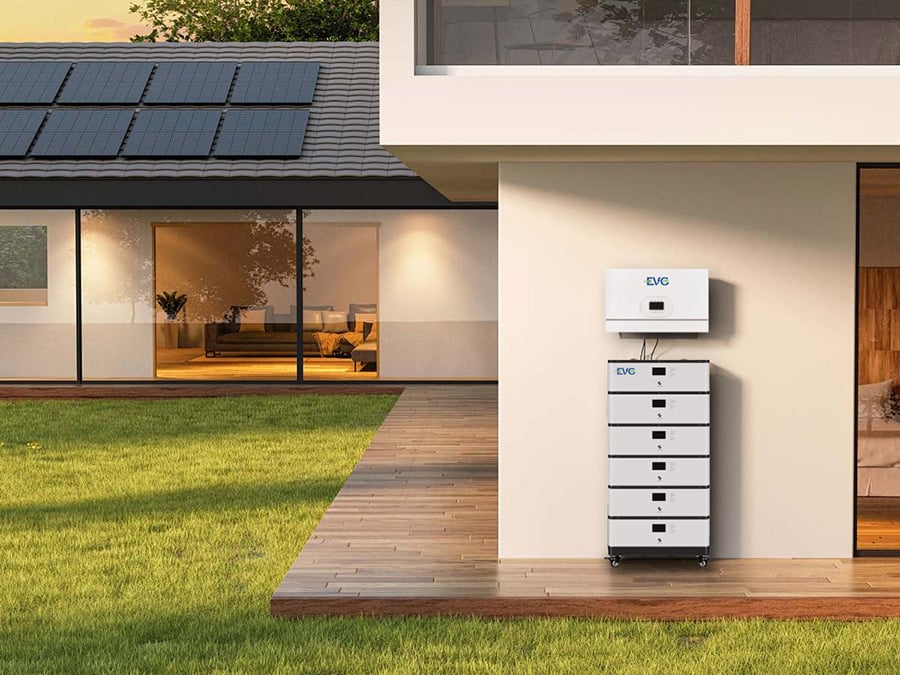
On the supply side, manufacturers are expanding from standalone batteries to complete home energy ecosystems, integrating solar PV, EV charging, heat pumps, energy management software and grid flexibility services into unified solutions. EVCity’s 3-in-1 energy storage inverter all-in-one unit — based on LiFePO4 cells and supporting multi-unit parallel expansion — and its home/commercial energy storage system, which integrates PV, inverter and storage with seamless on-grid/off-grid switching, fit squarely into this ecosystem-oriented approach.
It is also worth noting that supplier rankings are changing rapidly. Germany’s residential storage market is becoming more fragmented, with leading vendors losing share and smaller brands expanding. Market leadership is no longer guaranteed, creating opportunities for new entrants while also testing their delivery capabilities.
C&I: Solar PV, Storage and Energy Management Merge Into a Single Business Case
In the commercial and industrial segment, the trend is equally clear: solar PV, energy storage and energy management are merging into a single business case, making industry collaboration increasingly important. Companies are no longer treating storage as a standalone cost item, but integrating it into a broader revenue model that covers peak shaving, demand charge management and ancillary services.
Changes in incentive structures across multiple countries are also accelerating this shift. Falling rooftop solar feed-in tariffs and the gradual phase-out of net metering are pushing households and businesses to maximize self-consumption, directly increasing the attractiveness of adding storage.
Conclusion: Energy Storage Is Becoming Core Energy Infrastructure
Overall, Europe’s energy storage market is developing along two complementary paths. On one side, utility-scale storage is becoming essential infrastructure for balancing renewable electricity. On the other, distributed storage is deepening its role in homes and businesses through integrated energy management systems. For manufacturers, this represents a dual opportunity: large grid-connected projects align with infrastructure-level investment, while distributed markets help strengthen customer relationships. EVCity’s product portfolio — spanning portable power, residential all-in-one systems, home and commercial solutions, and large-scale C&I cabinets — is built around these two pathways.
Event information: European Sustainability Week 2026 will take place from 23 to 25 November in Petersberg, near Bonn. The environmental forum on 24 November will share the market insights outlined above. Last year, the event attracted more than 600 decision-makers from 23 countries.
Table of Contents
- Utility-Scale Projects Become the Main Engine of the Next Growth Wave
- Projects Are Growing Larger and More Complex, Reshaping the Competitive Landscape
- Residential Storage: Not Slowing Down, But Entering a More Mature Competitive Stage
- C&I: Solar PV, Storage and Energy Management Merge Into a Single Business Case
- Conclusion: Energy Storage Is Becoming Core Energy Infrastructure