
Brazil’s Free Electricity Market Opening: Why EV Charging and Distributed Energy Players Should Pay Attention

Brazil is preparing for one of the most significant changes in its power sector in decades. Under Law 15.269/2025, the country’s free electricity market will expand to low-voltage consumers, starting with industrial and commercial users in November 2027 and residential customers in November 2028.
This shift could affect millions of consumers, electricity retailers, distributed generation developers, EV charging operators, and energy technology providers. But a new study based on 88,000 consumer units in subscription-based solar generation schemes suggests that retail expansion will not be risk-free.
For companies planning to operate in Brazil’s emerging retail energy and e-mobility markets, the message is clear: opportunity is growing, but credit discipline, liquidity management and consumer protection will be just as important as price.
What the Latest Brazilian Study Shows
A study developed by Allez Estratégia, using data from Wattio, analysed 88,000 consumer units linked to 1,400 shared solar plants across 40 electricity distributors between January 2025 and May 2026.
Two figures stand out:
• Average monthly payment delinquency rate: 17%
• Average monthly customer churn: 4%
If sustained, a 4% monthly churn rate could translate into annual customer turnover of more than 40% of the base. The researchers warned that fragmented, low-voltage customers do not eliminate payment risk. In a competitive retail market, overdue payments can quickly affect retailers’ working capital and ability to meet financial obligations.
The study also found that subscription-based solar generation offered an average annual discount of around 17%, rising to about 19% in 2026. While lower prices help attract customers, they can also compress margins when acquisition costs, delinquency and working capital needs are high.
Importantly, the authors say this experience does not perfectly predict how Brazil’s free electricity market will evolve. But it does highlight risks that could become more visible as retail competition expands.
Why This Matters for EV Charging Operators
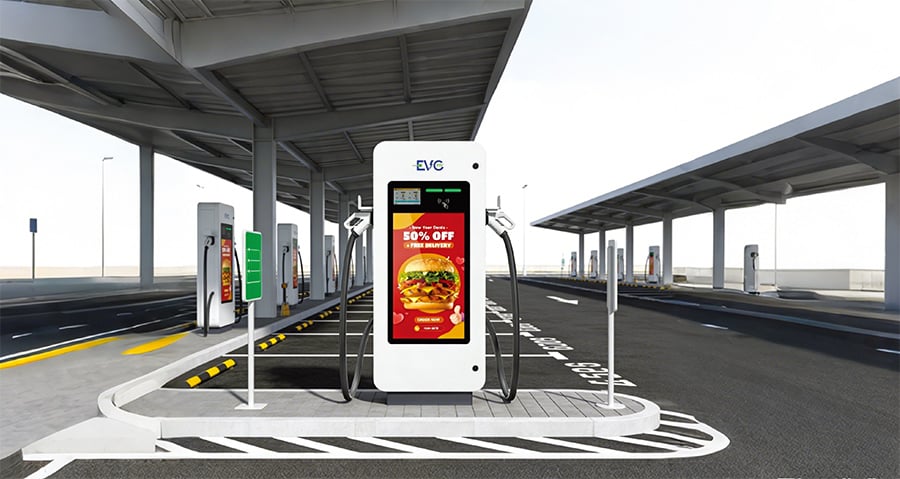
EV charging is an energy-intensive retail business. In Brazil, public and semi-public charging points reached around 21,061 by February 2026, and the market is still heavily fragmented, with many small operators managing local sites.
As the free electricity market opens, charging operators may gain more flexibility to choose suppliers, negotiate tariffs and bundle charging with solar, storage or time-of-use plans. However, they will also face new exposure:
• Electricity cost volatility: Retail contracts may shift pricing risk from distributors to end users and retailers.
• Customer acquisition pressure: Aggressive discounts can attract users but reduce profitability if churn is high.
• Payment and cash-flow risk: Small commercial customers may prioritise rent, payroll and supplies over energy bills.
• Contract complexity: Switching suppliers or returning to a distributor may involve long lead times, creating uncertainty for operators and consumers.
For charging networks, energy is not only an operational cost. It is also a core part of the customer experience, pricing strategy and brand reliability.
Where Storage and Smart Energy Solutions Fit In
Brazil’s power system is already adding large volumes of solar and wind capacity. The national grid operator has warned that wind and solar curtailment could reach up to 40 GW annually between 2027 and 2030 if grid flexibility does not keep pace.
That makes storage, smart charging and energy management more relevant, not less.
Battery energy storage systems can help charging sites and commercial consumers:
• Reduce exposure to short-term price spikes;
• Shift charging load to lower-cost or higher-renewable periods;
• Support peak shaving and demand management;
• Improve resilience where grid capacity is constrained;
• Enable more predictable tariffs for end users.
At the same time, Brazil’s electricity reform is expected to increase demand for smart meters, billing platforms, customer-switching tools and retail energy-as-a-service solutions. For international energy technology brands, this creates a window to support local distributors, retailers, charging operators and commercial consumers with modular, compliant and data-driven solutions.
How EVCity Approaches Emerging Retail Energy Markets
At EVCity, we focus on helping partners navigate the intersection of electric mobility, distributed energy and retail electricity. Our perspective is that Brazil’s market opening should not be treated only as a tariff opportunity. It is also a test of operational readiness.
We support partners through OEM and ODM capabilities, enabling charging, storage and energy management solutions to be adapted to local regulations, brand requirements and commercial models. Our focus includes:
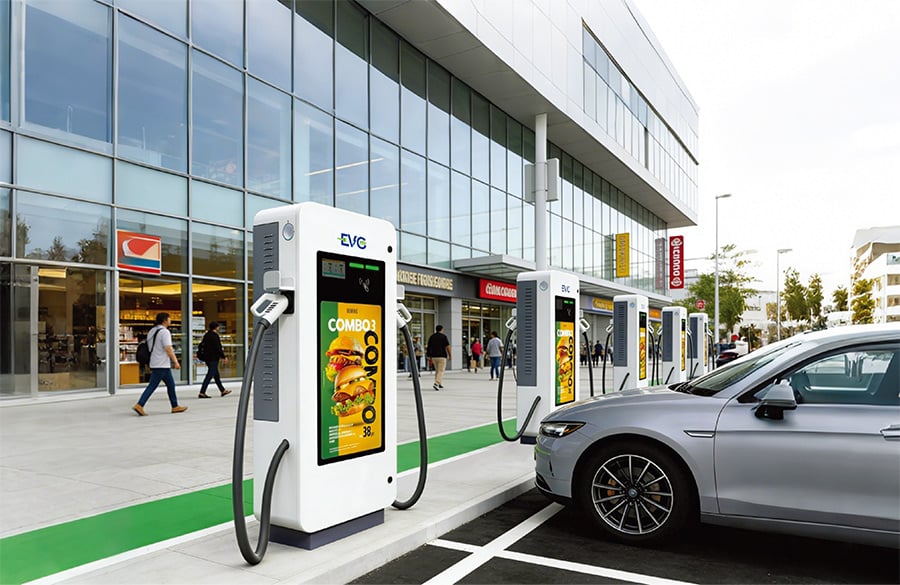
EV charging infrastructure for commercial, fleet and public sites;
Energy storage and solar integration to manage cost, reliability and renewable consumption;
Smart energy management for load control, tariff optimisation and customer visibility;
Digital operations tools that support billing, monitoring and customer retention;
OEM/ODM customization for hardware, software interfaces, branding, connectors, compliance documentation and packaging.
For distributors, retailers, charging operators and commercial consumers, the next phase of Brazil’s power market will reward companies that can manage both energy flows and financial flows.
What to Watch Before 2027–2028
• Final regulatory details from ANEEL and CCEE;
• Smart meter deployment and billing system readiness;
• Credit and consumer protection rules for low-voltage retail contracts;
• Short-term electricity price behaviour under the PLD mechanism;
• Growth of distributed solar, storage and EV charging demand;
• Early retailer failures or consumer complaints, which could trigger tighter oversight.
Brazil’s free electricity market could give consumers more choice and help accelerate cleaner energy adoption. But sustainable growth will depend on strong governance, realistic pricing, reliable customer experience and practical energy technology.